
My Brain Team: What To Do When Emotions Run High is a therapeutic resource that teaches emotion regulation and mindfulness skills to children ages 6 and up.

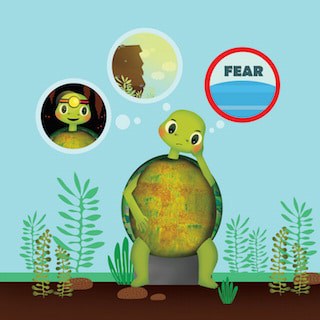
Liv is a fun and creative 10-year old girl who explains how the brain works through the different imaginary characters in her brain team. We learn how the ‘amygdala feelers’ serve to protect us from danger while the ‘prefrontal cortex thinkers’ help us to calm down, solve problems, and relate to others.
Click the image to view more
How can I help my child with emotional self-regulation?
A pretty common concern I hear from parents is that their child loses control over their emotions and can go from 0 to 100 very quickly. That is, they see that their child becomes overwhelmed, upset, anxious, and/or angry both easily and often over seemingly small things or situations. It is as if their child’s emotions have taken over (or have essentially hijacked their thinking brains) and there is no way to rationally talk to or reason with them. Parents often want to know how to help their child calm down and regulate their emotions.
My clinical approach is to first help parents and children understand what is happening in their brains. When our emotions, such as anger and anxiety, run high and feel overwhelming, we tend to react impulsively (as a way of coping) and without thinking things through. That is, for both children and adults alike, the same “fight-flight-freeze-faint” (4Fs) response is triggered when faced with any possible threat and danger (whether the threat is real or imagined).



 In a previous
  In my clinical practice, I have seen a number of children and adolescents who suffer from Obsessive Compulsive Disorder (OCD). Here are different examples of how OCD presented in 3 of my clients:
  For example, she had to flush the toilet handle multiple times and repeatedly turn the faucet sink handles, turn the lights on and off repeatedly, check and re-check her hair iron to make sure it was off, do certain things an even number of times only, and perfectly align and order her clothes in her closet and in her drawers.
 Not too long ago, a friend asked me for advice about how to help her 9-year old daughter who has developed a fear of death. This young girl expressed repeatedly to her mom that she was afraid her mom and dad were going to die and then what would happen to her. Her fear seemed to stem from her grandfather’s recent minor surgery but it was becoming an issue that was affecting her mood, behaviour, and sleep. My friend was concerned about how to approach this topic with her daughter as well as how to reassure and help her.
  Eating disorders (EDs) in children and adolescents are serious psychological conditions that cause changes in eating habits and can lead to serious or even life threatening health problems.